



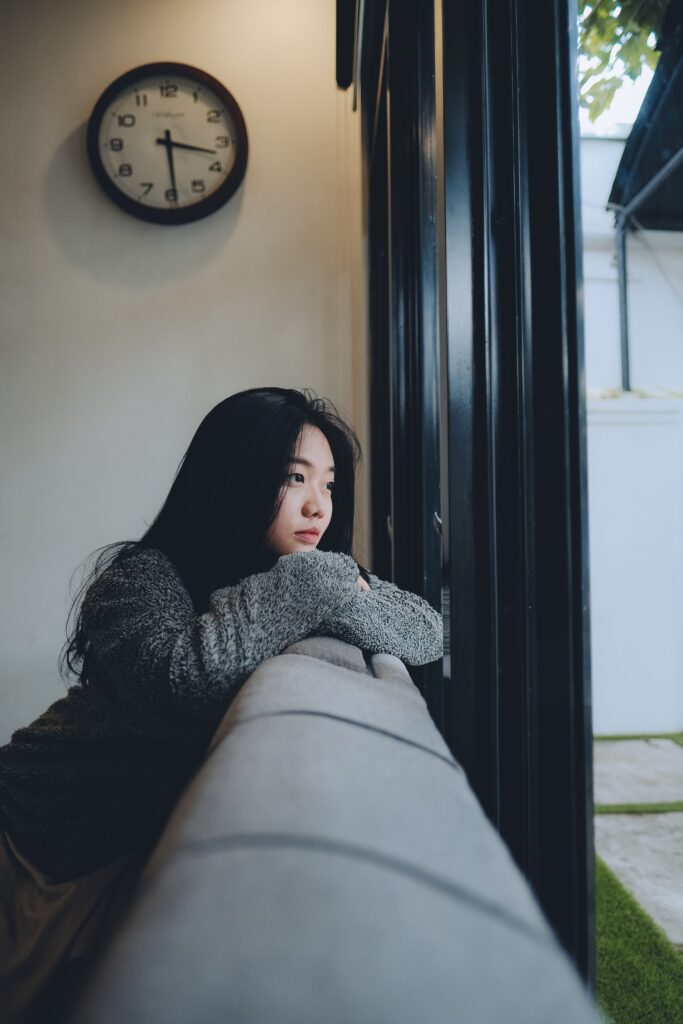
Several years after my Autism diagnosis, I began noticing something.
For most of my life, I thought I was just sensitive, emotional, complicated or “too much.” I spent decades trying to understand why relationships often felt emotionally confusing, why I carried such deep longing and why I lived with a quiet but persistent sense that something inside me was always waiting. From the outside, my life looked functional; I built a career, raised children, maintained relationships, cared for others and adapted constantly. Yet internally, there was often a feeling of suspension, as though part of me was standing still emotionally while life continued moving around me.
I thought the feeling was loneliness but as I settled into life after my autism diagnosis, I began realizing it was something much deeper than that.
Many later-diagnosed Autistic women report a stage of adjustment that emerges several years after diagnosis, one that can be surprisingly difficult to explain. The diagnosis itself can initially bring relief, grief, validation, anger, clarity, exhaustion or emotional overwhelm. But after some time passes, another layer often begins to emerge when the nervous system slowly starts loosening its grip on decades of masking and survival adaptation. I was no longer overriding myself in the same way every moment of the day. I began observing my internal world differently and patterns that once felt invisible suddenly became impossible to ignore.
This period of post-diagnosis settling has felt deeply disorienting at times. I began reevaluating relationships, family dynamics, emotional patterns, identity, attachment wounds, sensory experiences and the roles I had played throughout my life. It felt as though I was waking up emotionally in a way I never had before. The structures that once held my identity together began shifting and many of the things I once believed were personality traits slowly revealed themselves as survival adaptations.
One of the biggest realizations was recognizing how much of my life had been organized around waiting.
As a child, I remember waiting for my father. He was the parent I felt closest to, yet he was often away for work and emotionally unavailable in consistent ways. My mother, meanwhile, created an emotionally chaotic environment filled with enmeshed boundaries, emotional intensity, family conflict, unpredictability and instability. Without consciously realizing it, I learned to organize myself around emotional inconsistency. I became highly attuned to the emotional atmosphere around me; I monitored tension, adapted constantly and learned to anticipate rather than fully relax.
Children adapt brilliantly in order to survive emotionally. The problem is that these adaptations often become relational templates in adulthood.
Decades later, I found myself in a marriage where emotional distance had become a familiar pattern. Slowly, painfully, I began recognizing that I had spent years emotionally positioned toward the hope of greater connection, greater intimacy and greater emotional availability. I was waiting for openness, reciprocity and emotional arrival. Somewhere inside me was still the child waiting for closeness to arrive.
What has been particularly confronting is realizing that the waiting was never only about my marriage, it much older than that and more embedded in my nervous system.
I now understand that many people raised in emotionally inconsistent homes unconsciously learn that love is intermittent. Connection becomes associated with anticipation, uncertainty, longing and endurance. The nervous system adapts by remaining externally focused, constantly scanning for signs of closeness, distance, safety or withdrawal. Over time, emotional waiting stops feeling like a conscious behaviour and becomes an internal orientation toward life itself.
Emotional waiting does not always look like sitting still. In fact, many of us remain incredibly productive while we are waiting. We build careers, raise families, care for others, achieve goals and keep moving forward. Yet internally, part of us remains organized around the anticipation of something just beyond reach. We tell ourselves that we will fully relax when the relationship improves, when we finally feel understood, when someone chooses us, when the uncertainty resolves or when the emotional connection we long for finally arrives. Life continues, but part of us remains paused.
For me, this created an exhausting internal split. One part of me could clearly see the emotional realities of my relationships and another part still hoped and waited. I often felt suspended between acceptance and longing, reality and possibility.
What feels especially important is that these patterns only became fully visible after diagnosis. Before diagnosis, enormous amounts of my energy went into masking, compensating, self-monitoring, people-pleasing, adapting and just trying to survive socially and emotionally. There was very little internal space available to deeply examine the relational patterns underneath those survival strategies. Once the masking began softening, however, deeper attachment wounds and relational dynamics rose to the surface with more clarity.
Looking back, I can see how autism shaped this experience in ways I did not understand at the time. Many Autistic girls learn early that their natural ways of thinking, feeling, communicating, and moving through the world are somehow wrong. We become observers; we study other people and we monitor reactions. We adapt continuously in order to belong. Over time, this can create a life organized around external cues rather than internal experience. We learn to look outward before looking inward.
For me, waiting was an attachment pattern and it was also a masking pattern. I became skilled at anticipating the needs, emotions and expectations of others while becoming increasingly disconnected from my own. Decades of adaptation taught me to prioritize relationships, harmony and belonging over self-attunement. In many ways, I had learned to wait for confirmation from the outside world before trusting what I already knew inside myself.
What I once thought were fixed parts of my personality increasingly revealed themselves as adaptations.
The woman who believed she was “too sensitive” was often responding to emotional deprivation. The woman who believed she was needy was longing for basic emotional attunement. The woman who believed she was simply anxious was carrying a nervous system shaped by inconsistency, unpredictability, years of emotional waiting and the exhausting work of adapting herself to fit a world that rarely understood her.
Beneath these realizations has been profound grief. Grief for unmet childhood needs and emotional security that never fully existed. Grief for how much energy I spent adapting to emotional distance, hoping for reciprocity and organizing parts of my life around anticipation rather than self-presence. Sometimes I think I remained emotionally suspended because fully releasing the waiting would mean fully confronting painful truths about loneliness, attachment and the emotional realities of my relationships.
Yet awareness itself has become the beginning of change.
I am learning to recognize when I enter what I now call the waiting state. It is subtle, but once I learned to see it, I began noticing it everywhere. It appears when I find myself monitoring another person’s emotional availability rather than attending to my own experience. It appears when I check my phone repeatedly, waiting for connection. It appears when I postpone my own desires, plans or joy until I know where I stand with someone else. It appears when uncertainty feels intolerable and my attention becomes consumed with seeking reassurance, clarity or emotional resolution.
The waiting state is not really about another person. It is about the way my nervous system learned to organize itself around anticipated connection. It is the feeling that life cannot fully begin until someone arrives emotionally, responds, understands, chooses or reassures. For many years, I did not realize how much of my energy was spent living in that space.
For years, I believed the waiting was about other people. What I now understand is that I was also waiting for permission. Permission to rest, to stop performing, to stop adapting, to trust my own experience, and to take up space without earning it first.
Looking back, I was waiting for my own life to begin. Waiting to feel enough. Waiting to feel settled. Waiting to feel safe being myself.
I am beginning to understand that healing may not involve forcing certainty, forcing repair, forcing separation or forcing answers. I now believe it involves learning to remain connected to myself even in the presence of uncertainty. For someone whose nervous system has spent decades organized around anticipation and emotional inconsistency, this feels unfamiliar at times. But I also sense something shifting. For much of my life, I waited for emotional arrival, and now, perhaps for the first time, I am beginning to arrive for myself.