






Unlearning the Internalized Doubt
By Michelle Labine, PhD
May 2025
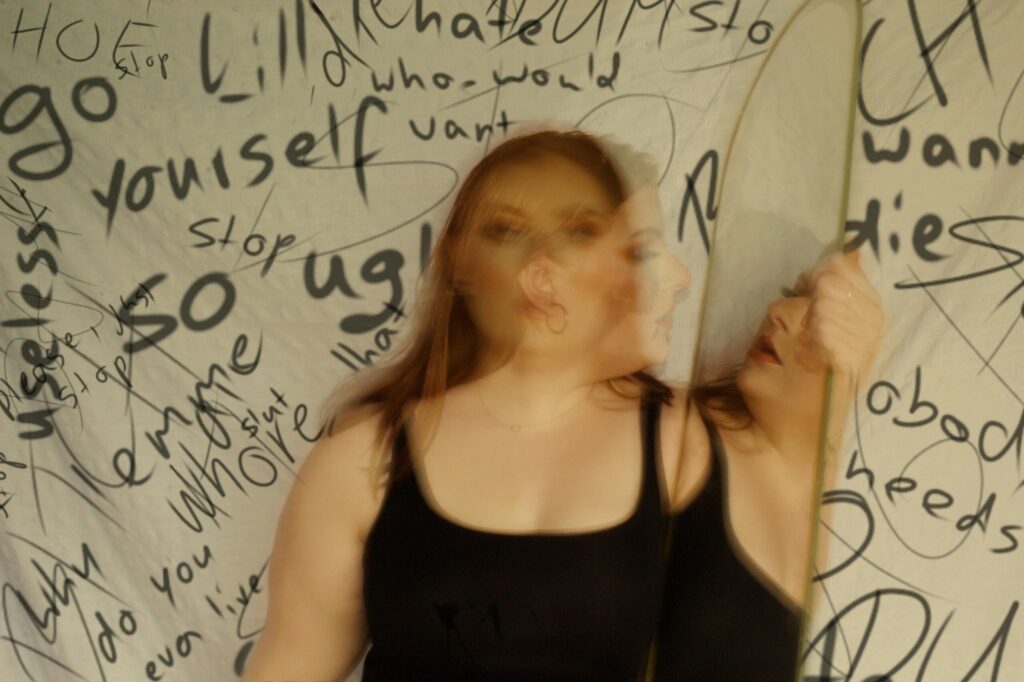
Before many of us had the language of autism available to us in a way that actually resonated with our lived experience, before diagnosis, self-recognition, and the gradual process of unlearning began, we spent years doubting ourselves. We questioned our own perceptions, minimized what we were feeling, and reasoned away the needs that kept surfacing in our bodies and minds. Again and again, we convinced ourselves that what we were experiencing could not really be that significant.
In many ways, we learned to gaslight ourselves.
This happened because it was a way to survive. When you grow up in a world that does not reflect your inner reality back to you with clarity or understanding, it becomes easier to trust the world’s interpretation than your own. Over time the external messages begin to sound louder than your own instincts.
I told myself I was overreacting when noise made my body feel flooded with sensation. I told myself I was lazy when I needed hours of quiet after socializing. I told myself I was too sensitive, too intense, too rigid in the ways I approached life. I believed that if I could just try harder, if I could become easier to be around, more adaptable, more agreeable, then the discomfort I carried would eventually disappear. It never truly disappeared; I just became better at pushing it down and moving forward as though nothing was wrong.
Many Autistic women carry an internal dialogue that runs in the background of their daily lives. It is a persistent script that questions our capacity and our reactions. We ask ourselves why something feels so difficult when others appear to move through the same situation with ease. We remind ourselves that other people do not need as much downtime or as much space. We tell ourselves to let things go, to stop being dramatic, to try harder, and to avoid becoming a burden to the people around us.
Over time we begin to monitor and correct ourselves using the very expectations that once harmed us. The voice of the outside world becomes internalized, and eventually it feels like our own. One of the most challenging aspects of this pattern is how automatic it becomes. The internal pressure can operate so subtly for years, even decades, before we realize that it does not originate from within us. It grows out of the story we absorbed about who we were supposed to be.
For me the shift away from this pattern happened gradually. There were small moments when something inside me paused long enough to question the old script. One of those moments happened in my kitchen. The kettle was screeching on the stove, the dishwasher hummed steadily, the lights felt unusually sharp, and my children were talking all at once. It was an ordinary afternoon in many ways, yet inside my body everything felt as though it were colliding. I could feel the tension rising, the sense that I might either shut down completely or burst into tears without warning.
In the past I would have responded with criticism directed toward myself. I would have told myself that I was being ridiculous, that I needed to pull myself together, that I was once again failing at something that should have been simple. That day I paused instead. I named what was happening, sensory overload.
That single act of naming the experience changed the way I understood the moment. The sensations themselves did not immediately disappear but the meaning attached to them shifted. Instead of interpreting the experience as evidence that I was weak or overly dramatic, I recognized it as a nervous system response that made sense within the context of how my brain processes the world
In that moment I was simply responding to an environment that had become overwhelming for my nervous system. And for the first time, I allowed myself to believe that explanation.
This is often what it means to begin coming home to ourselves; ending the habit of arguing with our own experience. It is about allowing our perceptions and feelings to exist without immediately dismissing them.
Gradually we begin to replace the old script with something different. Different than questioning whether we are allowed to feel what we feel, we begin acknowledging that our reactions have meaning. We start recognizing when something is too much and allowing ourselves to respond with care rather than criticism.
Unlearning the habit of self-gaslighting is a slow and delicate process. Each time we choose to believe our own experience we open space for trust and safety to grow within us. We begin to move through life with greater softness rather than constant self-correction.
You do not have to prove that your pain is real. You do not have to justify the needs your body communicates to you. You do not have to reshape yourself to match someone else’s definition of what acceptable looks like. You are allowed to listen to your body.
You are allowed to name what is real for you. And you are allowed to stop questioning your own experience.