


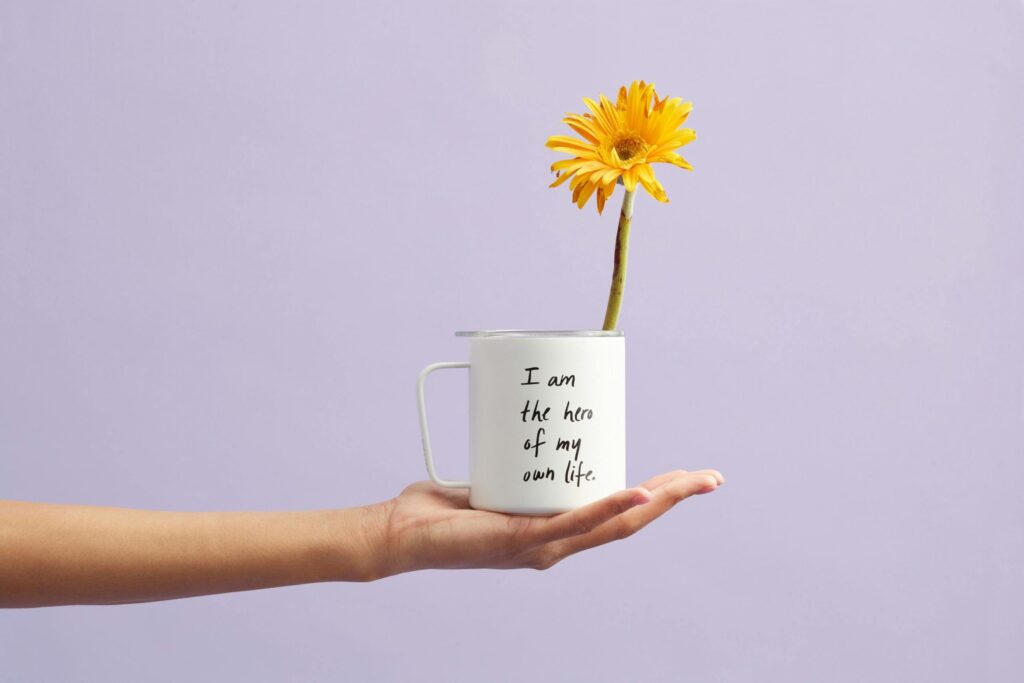
Don’t Touch My Mug: Why Shared Living Is Hard When You’re a Person Who Needs Her Stuff Left Alone (Especially If You’re AuDHD)
By Michelle Labine, PhD
August 2025
There’s shared warmth, inside jokes, and those impromptu dinners that feel like a sitcom in the making, but living with other adults, even the ones you adore, also means navigating the daily push and pull of space, belongings, and unspoken expectations. I genuinely love having all my kiddos, now young adults, living at home, and I often say I love having all my birds in the nest, but even the coziest nests require boundaries, especially when it comes to something as sacred as my favourite coffee mug. Because beneath the humour, there is a real and accumulating strain that can start to feel like emotional chaos when you’re someone, like me, who needs her things exactly where she left them and untouched by other people’s well-meaning hands.
I have a very specific relationship with cups, mugs, and water bottles, which is to say I am a full-on beverage vessel enthusiast, and these are not just dishes to me but objects of comfort, little anchors of predictability, emotional support mugs if we’re being honest. So, when I say, please don’t use my cup, I mean it in a way that is both sincere and deeply felt, and yet somehow they still disappear. Despite repeated requests, sometimes gently stated and sometimes delivered with theatrical emphasis, my favourite mug will vanish and then reappear days later in the backseat of someone’s car, half-full of lukewarm coffee and quiet betrayal, and my coffee cup lids seem to disappear altogether, like they’ve entered some alternate dimension alongside missing socks. By the time I reach my limit, what looks from the outside like an overreaction is actually the result of a slow build, and suddenly there I am, standing in the kitchen sounding like I’m negotiating an international treaty over the dishwasher.
To someone else, it might look like I’m reacting too strongly to something small, but for me, it isn’t small at all. I’m neurodivergent, I’m AuDHD, and what are often dismissed as little things are, in my lived experience, big things in very convincing disguises. For a long time, I internalized the idea that I was too much, too sensitive, too intense, too dramatic, not just about mugs but about everything, and I tried to shape myself into something more acceptable, more flexible, more easygoing. My later in life diagnosis disrupted that narrative in a way that was confronting and freeing, because it helped me see that I’m not too much, I’m just not built for casual mug theft, and that distinction matters more than I can put into words. I’m learning, slowly and imperfectly, to own my experience without minimizing it, to be accountable without gaslighting myself, and to recognize that having needs doesn’t make me difficult, it makes me human.
What I’ve come to understand about myself is that when I leave something somewhere, especially something that brings me comfort, that placement is intentional in ways that aren’t always visible from the outside. It helps me create a sense of order in a world that can often feel unpredictable, reducing decision fatigue and softening the edges of overwhelm, giving me small, reliable points of steadiness throughout the day. When those things are moved or disappear, it’s not just inconvenient, it’s disorienting in a way that can ripple through my nervous system, because those objects are part of how I regulate and feel okay in my own space.
I also know that I don’t like sharing certain things, and that has been a hard truth to claim without apology. In a world that often frames sharing as inherently good and boundary-setting as selfish, it can be uncomfortable to say that some things are mine and I want them to remain mine, especially when those things are tied to comfort, sensory preferences, and emotional grounding. My mugs, as simple as that might sound, are part of that system for me, and sharing them doesn’t feel neutral or casual, it feels like giving away something that helps me stay regulated, which is not a small thing.
I’ve also noticed how much calmer, kinder, and more present I am when my environment feels predictable and my belongings are where I expect them to be. I already navigate a world that requires constant adjustment, whether that’s managing executive functioning challenges, sensory input, or the ongoing effort of social interpretation, and when my physical space is consistent, it frees up capacity for me to show up more fully in my relationships and my life. When that consistency is disrupted over and over again, it’s not just about the object that’s missing, it’s about the cumulative impact of feeling like my needs are optional or easily dismissed.
And that’s really what sits underneath all of this, because when I’ve clearly communicated a boundary and it’s ignored or minimized, it doesn’t land as a small oversight, it lands as a kind of invisibility, a message that what matters to me doesn’t carry enough weight to be remembered or respected. Like many neurodivergent people, I have spent years adapting, softening, letting things go, telling myself not to make a big deal out of things that felt big in my body, and I’m no longer willing to do that at the expense of my own regulation and wellbeing.
What I need isn’t complicated, even if it might feel unfamiliar to others, because it comes down to respect, consideration, and a willingness to take my words seriously the first time I say them. I need my belongings to be treated as mine, especially the ones I’ve named as important, I need things that are borrowed to be returned in a timely and respectful way, and I need my reactions to be met with curiosity rather than dismissal, with an understanding that what might seem small on the surface is connected to something much deeper in my lived experience.
And if you’re someone who also feels this, who needs your things to stay where you left them, who feels that intense ripple when something is moved or taken without asking, you’re not being unreasonable, you’re responding to your nervous system in a way that makes sense. You’re not asking for too much, you’re asking for something that allows you to feel regulated, respected, and at ease in your own space.
And to my family, who I love deeply and genuinely enjoy sharing my home with, this is said with both affection and sincerity, please, just leave my mug alone, because if it disappears again, I cannot guarantee there won’t be labels, hiding spots, or a level of creativity in mug protection that none of us are prepared for.