


Reflections on Completion, Growth, and the Autistic Drive for More
By Michelle Labine May 3, 2025
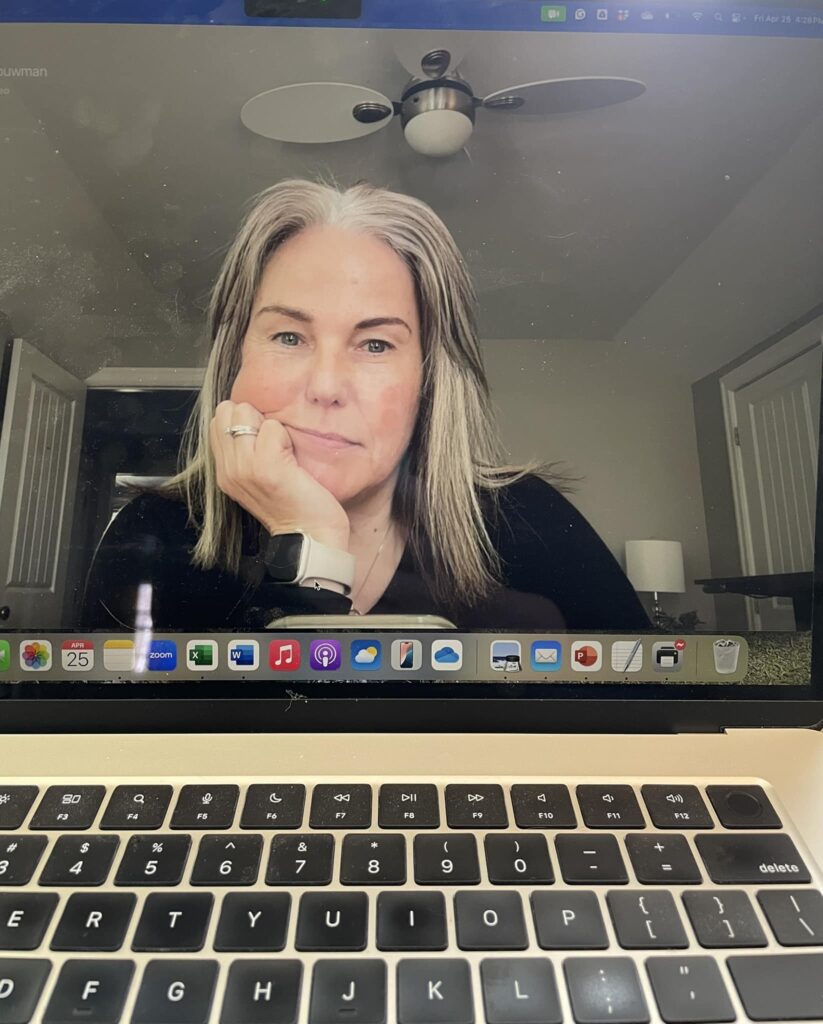
This laptop and I have been through a great deal together. It has witnessed my transformation through two master’s degrees, the long journey of PhD research, and the writing of my first book. It has sat beside me during early mornings, late nights, and countless moments in between when I questioned whether I had it in me to keep going.
Yesterday, I successfully defended my PhD and passed with distinction. I felt proud, grateful, and deeply aware of the magnitude of the moment. Yet alongside those feelings, another question surfaced quietly inside me. Is it ever enough? When I reflect on it honestly, I realize that this question has been echoing through my life for as long as I can remember.
In my early years at school, I excelled academically and genuinely loved learning. School made sense to me because it offered clear expectations, rules, and structure, and I thrived in that environment. I figured out quickly how to follow the rules, how to meet the teacher’s expectations, and how to earn the grades that signaled success. Achievement became a compass and a form of protection; it was the currency through which I measured my worth and the shield I carried into spaces where I often felt uncertain.
From the outside, it looked as though I fit in well enough. I had friends and participated in the rhythms of school life. Yet internally I often felt unknown, as though people saw the version of me that functioned well in that system without really seeing who I was underneath. At the time, being a friend often felt like a performance. I learned to focus intensely on others, shaping myself to match what people seemed to want or expect. I mirrored behaviours, copied social cues, and adjusted my responses in ways that allowed me to blend in. It worked in many ways, yet it also left me with a sense of hollowness that I did not know how to name.
One memory from childhood has stayed with me vividly. In grade five we created a yearbook where each student was given a label meant to capture something about their identity. I was given the title of the smartest girl. That was my category. My defining characteristic. I remember feeling unexpectedly devastated by that label, even though it was intended as praise.
What I secretly wanted were the titles that went to other girls in the class. One girl was named the prettiest and another was named the most popular. I remember feeling an ache of envy because they seemed to represent something I had never quite managed to access. They symbolized belonging, being liked, and being chosen effort.
I was not that girl. I was the smart one, the overachiever, the student with the neat handwriting and carefully organized projects. And so, I leaned into what I knew how to be. If I could not be the girl everyone gravitated toward at recess, perhaps I could be the girl who stood out for being impressive. Perhaps if I kept doing more, learning more, and achieving more, the feeling of enoughness would finally arrive.
The pattern followed me into high school, although the transition was far more difficult than I ever expected. I did not attend the same school as most of my grade school friends. Instead, I enrolled in a different high school known for its academic reputation. Each morning I took the city bus with the only other person I knew, entering a social environment that felt unfamiliar and overwhelming.
What had once been my source of confidence suddenly felt incredibly unstable. The social dynamics were different and far more intense, and I struggled to find my place within them. I could not rely on my academic identity in the same way I once had. Although I continued to work hard, the grades did not come as easily and I felt increasingly exhausted and disoriented.
In response, I shifted the way I tried to belong. If academic achievement could no longer anchor my identity, perhaps social belonging could. I became deeply involved in sports and social activities, joining several school teams and stepping into the role of the athletic girl. I also embraced a social life that revolved around being fun, spontaneous, and carefree. In many ways I became known as a party girl.
That persona followed me into university. More than anything, I wanted to find my place and discover the people with whom I truly belonged. I played varsity volleyball during my first year but chose not to continue as my focus turned toward building a social world that felt alive and connected.
Academically, those years were difficult for me. I struggled through my undergraduate degree and was incredibly hard on myself throughout that time. Shame became a constant companion, and my relationships often felt unstable as well. There were many small emotional wounds during those years, experiences I now understand as microtraumas that accumulated over time through misunderstanding, exclusion, and the persistent sense of being too much or not enough.
At the time I did not have the language to describe what I was experiencing. Looking back now, I recognize that I was deeply burned out. It was a dark and disorienting period in my life, one where I felt disconnected from myself and uncertain about who I really was.
The search for enoughness has been a thread running through my life. It has often shown up as a relentless drive toward the next idea, the next project, or the next version of myself that might finally feel complete. Beneath that drive was a persistent belief that I needed to prove my worth, justify my presence, and somehow earn the right to rest.
I learned very early that being exceptional felt safer than just being myself. Preparation, achievement, and over functioning provided a sense of security that I did not always feel internally. Even now I occasionally hear that familiar whisper telling me to keep going, to do more, and to become better.
Today I notice that voice without allowing it to control my direction. It is present, but it no longer defines the path I take.
Completing my PhD represents something significant in my life, yet the meaning of this moment extends far beyond the letters that will now follow my name. Through the process of research, writing, and reflection that shaped my doctoral work, I came to understand not only the academic landscape of my field but also myself in ways I had never anticipated. My research focused on the experiences of women who are diagnosed with autism later in life, and through that work I encountered story after story that echoed pieces of my own journey. Listening to these narratives and engaging deeply with the research illuminated patterns so many of us share, including years of masking, the exhaustion of trying to belong, and the profound sense of recognition that can come when the pieces of our lives finally begin to make sense.
Education once gave me a place where I could belong. It offered structure, rules, and a clear path for how to succeed when much of life felt confusing. Yet somewhere along the path of completing my PhD, that relationship with education shifted. What began as an academic pursuit gradually became something deeper. This stage of my educational journey was not only about achievement or scholarship. It also became a process of healing. Through studying the lives and experiences of other late diagnosed women, I began to recognize my own story with greater clarity and compassion. That understanding has brought with it a sense of home within my own life.
Today I am allowing this moment to be an arrival rather than a launching point for the next goal. I am allowing myself to pause, to celebrate, and to breathe. Because the truth I have slowly come to understand is that I have always been enough. And so have you.