
BLOG-Papercranes & Starlight
Papercranes & Starlight: A Blog for Later Diagnosed Neurodivergent Women
Short, honest reflections on having to adapt(masking), identity, relationships, and the experience of seeing yourself clearly for the first time.
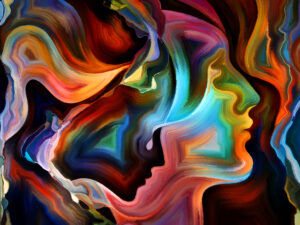
Seeing yourself reflected
Finding Ourselves in the Story
This space offers real stories that may serve as a reflection for late-diagnosed Autistic women seeking to see themselves more clearly. Whether you’ve been formally diagnosed, self-identified, or are just beginning to question your neurodivergence in midlife or beyond, you’ll find short, honest pieces on masking, identity, relationships, sensory life, and self-discovery.
For many of us, growing up meant moving through the world without a reflection. We didn’t see ourselves in the diagnostic criteria, in the media, or in the stories told about autism. What we did see often felt nothing like us. Without that mirror, the possibility of being Autistic rarely occurred to us. Instead, we learned to believe we were broken, failing, or somehow wrong.
Living without reflection takes its toll. It can distort the way you see yourself, bury your truth, and leave you carrying a quiet shame that was never yours to begin with. That’s why reflection matters. That’s why storytelling matters. Finding yourself in a story—even for the first time—can be life-changing.
You may recognize parts of your own story here—or begin to see yourself in ways you never had the chance to before.
Folding, unfolding, and finding your light
Why Paper Cranes & Starlight
I chose the name Paper Cranes & Starlight because it reflects something about the later-identified neurodivergent experience.
The paper crane represents the ways many of us learned to fold ourselves in order to get by masking, adapting, shaping ourselves into something the world could recognize and accept. Unlike folding a paper crane, which is an intentional act, these adaptations were rarely deliberate. They emerged subtly over time as survival strategies: learning when to stay silent, when to perform, when to push through discomfort, and when to appear “fine.”
The paper crane holds both the beauty and the cost of that adaptation. It reflects the care, effort, and intelligence it took to move through a world that often didn’t understand us.
Understanding ourselves often arrives later in life. For many of us, this recognition comes late because the systems meant to identify and support us were never built with our experiences in mind. We were not seen, understood, or recognized often excluded entirely. Yet we have always been here. Like many stars that remain unseen, their light still exists in the sky, whether or not anyone knows how to look for it.
In learning to adapt in order to survive and belong, parts of who we were became folded beneath layers of adaptation. It is in the unfolding of the crane gently opening the creases that once helped us survive that those parts of ourselves begin to reappear.
Starlight represents something older and truer. It reminds us that who we are has always been there, even when we didn’t yet have the language or reflection to see it. Like starlight traveling across distance before it becomes visible, recognition can take time to reach us.
Together, the paper crane and the starlight hold the arc of many later-identified neurodivergent lives how we learned to fold ourselves to survive, and how we slowly begin to unfold into who we have always been.

Stories that reach the heart
When a Story Finds You
If something in my writing resonates with you, my request is that you consider sharing it. Sometimes a story finds its way to the person who may need it, helping them feel less alone and offering language for experiences they may have struggled to name.
In that way, my hope is that these reflections help individuals see themselves more clearly, feel understood, and ultimately find their way back to parts of themselves that were folded away in the effort to survive and belong.
I also offer this work as a way to contribute more broadly beyond the therapy room, and as a form of advocacy supporting greater recognition, understanding, and inclusion for later-identified neurodivergent people. Beyond that, it is also my hope these stories contribute, in some small way, to the larger cultural shifts still needed so that neurodivergent lives are fully recognized, respected, valued, supported, and resourced.

When My Diagnosis Became Their Healing: How Understanding Autism Changed All of Us
When My Diagnosis Became Their Healing: How Understanding Autism Changed All of Us By Michelle [...]
Dec

Learning to Listen to My Body: Moving From Self-Regulation to Self-Advocacy
By Michelle Labine, PhD December 2025 For years, I talked about self-regulation with my kids, [...]
Dec

Masking on Overdrive: How ADHD Amplifies Autistic Adaptation
Masking on Overdrive: How ADHD Amplifies Autistic Adaptation By Michelle Labine, PhD December 2025 There [...]
Dec

The Hidden Burnout: When ADHD Drive Meets Autistic Exhaustion
The Hidden Burnout: When ADHD Drive Meets Autistic Exhaustion By Michelle Labine, PhD A December [...]
Nov

When Trust Hurts
When Trust Hurts By Michelle Labine, PhD November 2025 I still feel embarrassed when I [...]
Nov

Part Two: When Images Guide Connection Autistic Knowing in Relationships
Part Two: When Images Guide Connection Autistic Knowing in Relationships By Michelle Labine, PhD November [...]
Nov

Part One: When the Mind Speaks in Images Autistic Knowing in the Therapy Room
Part One: When the Mind Speaks in Images Autistic Knowing in the Therapy Room By [...]
Nov

When Passion Turns Into Exhaustion: The AuDHD Rhythm of Intensity, Novelty, Burnout, and Rebirth
When Passion Turns Into Exhaustion: The AuDHD Rhythm of Intensity, Novelty, Burnout, and Rebirth By [...]
Nov

Not This Time
Not This Time By Michelle Labine, PhD November, 2025 For years, I’ve walked into situations [...]
Nov

When Connection Feels Like Danger: An Autistic Woman’s Experience of Overload and Self-Protection
When Connection Feels Like Danger: Experience of Overload and Self-Protection By Michelle Labine, PhD October [...]
Oct

Feeling “Childlike” in Power or Learning Situations: A Common AuDHD Pattern
Feeling “Childlike” in Power or Learning Situations: A Common AuDHD Pattern By Michelle Labine, PhD [...]
Oct
The Quiet Fear of Not Being Diagnosed
The Quiet Fear of Not Being Diagnosed By Michelle Labine October 2025 Many of my [...]
Oct

Not Anymore
Not Anymore By Michelle Labine October 2025 When an Autistic woman says, “I need [...]
Oct
Autism + Environment = Outcome
Autism + Environment = Outcome Understanding the Equation as a Late-Diagnosed AuDHD Woman By Michelle [...]
Oct

Beyond Defensiveness: How Shame Shapes Autistic Men and the Ones Who Love Them
Beyond Defensiveness: How Shame Shapes Autistic Men and the Ones Who Love Them By Michelle [...]
Oct

The Inner Dynamics Behind Defensiveness in Autistic Men
The Inner Dynamics Behind Defensiveness in Autistic Men By Michelle Labine, PhD October 2025 Why [...]
Oct
When Narcissistic Abuse Meets the Autistic Heart
When Narcissistic Abuse Meets the Autistic Heart By Michelle Labine, PhD October 2025 A narcissistic [...]
Oct

When Sharing Becomes Imposing: On Autonomy, Marriage, and the Need to Be Self-Guided
When Sharing Becomes Imposing: On Autonomy, Marriage, and the Need to Be Self-Guided By Michelle [...]
Oct

The Persistent Need for Autonomy: When Lack of Structure Feels Like Chaos
The Persistent Need for Autonomy: When Lack of Structure Feels Like Chaos By Michelle Labine, [...]
Oct

Taking an Inventory of My AuDHD Strengths at Work
Taking an Inventory of My AuDHD Strengths at Work By Michelle Labine, PhD September 2025 [...]
Sep

Who Am I Outside the Mask?
Who Am I Outside the Mask? By Michelle Labine, PhD September 2025 My mask [...]
Sep
When We Reduce Autism to an “Epidemic” Caused by Tylenol, We Erase Accountability
When We Reduce Autism to an “Epidemic” Caused by Tylenol, We Erase Accountability By Michelle [...]
Sep
Trump’s “Cure” for Autism Is Nothing New: It’s Recycled Eugenics
Trump’s “Cure” for Autism Is Nothing New: It’s Recycled Eugenics By Michelle Labine, PhD September [...]
Sep

The Neurodivergent Cycle: Slow Start, Hyperfocus, and the Crash
The Neurodivergent Cycle: Slow Start, Hyperfocus, and the Crash By Michelle Labine, PhD September 2025 [...]
Sep

When Background Noise Feels Like Chaos: AuDHD and the War on Sound
When Background Noise Feels Like Chaos: AuDHD and the War on Sound By Michelle Labine, [...]
Sep

When “No” Feels Impossible: Demand Avoidance in AuDHD Women
When “No” Feels Impossible: Demand Avoidance in AuDHD Women By Michelle Labine, PhD September 2025 [...]
Sep

When the Switch Flips: The AuDHD Cycle of Procrastination, Perfectionism, and the Crash
When the Switch Flips: The AuDHD Cycle of Procrastination, Perfectionism, and the Crash By Michelle [...]
Sep

The Quirky Pause: Why My New Coffee Press Sat for Months
The Quirky Pause: Why My New Coffee Press Sat for Months Michelle Labine, PhD September [...]
Sep

Alcohol Use and AuDHD: Untangling the Complexities
Alcohol Use and AuDHD: Untangling the Complexities By Michelle Labine, PhD September 2025 For many [...]
Sep

Sorry, I Have a Follow-Up Question… and Another
Sorry, I Have a Follow-Up Question… and Another By Michelle Labine, PhD September 2025 [...]
Sep

The Push and Pull: Living with Both Autism and ADHD
The Push and Pull: Living with Both Autism and ADHD By Michelle Labine, PhD [...]
Sep

Why Apologizing Can Be Hard for Neurodivergent Partners
Why Apologizing Can Be Hard for Neurodivergent Partners By Michelle Labine, PhD September 2025 Apologizing [...]
Sep

The Autistic Way of Eating: Comfort, Consistency, and Enoughness
The Autistic Way of Eating: Comfort, Consistency, and Enoughness By Michelle Labine, PhD September 2025 [...]
Sep
























Lorem Ipsum Dolor Sit Amet Consectetur
Lorem ipsum dolor sit amet, consectetur adipiscing elit, sed do eiusmod tempor incididunt ut labore [...]